Why Hardiness Zones Do Not Predict Rhode Island Spring Frost Dates
Rhode Island gardeners often use a hardiness zone to decide when to plant, then get caught out by a late spring frost. The reason is simple: zones and frost dates describe different things. Knowing what each can—and cannot—tell you helps you set planting windows, protect tender crops, and adjust for the conditions in your own garden.
What a hardiness zone tells you
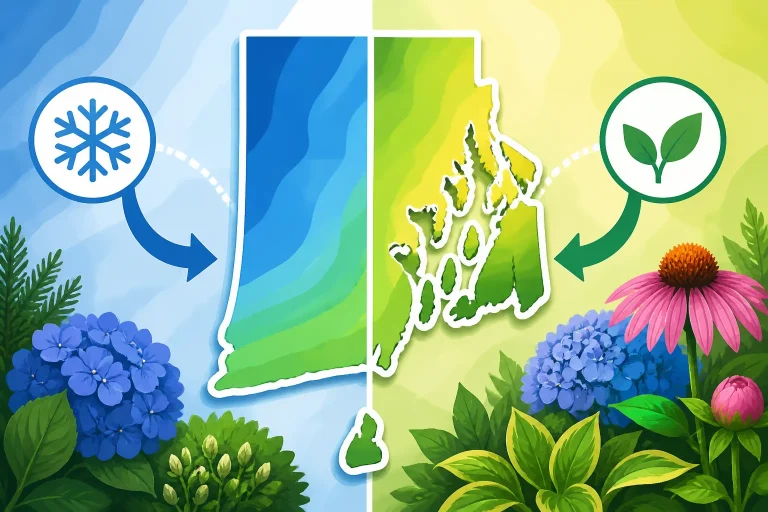
According to the USDA Agricultural Research Service, the map is based on the average annual extreme minimum winter temperature. That makes a hardiness zone useful when you are considering whether a perennial plant is likely to withstand winter cold in a location. It does not tell you when spring frost will happen.
This distinction matters because gardeners often treat a zone as a complete summary of local growing conditions. It is not. A zone describes one particular aspect of climate: the pattern of extreme winter cold. It does not provide a schedule for spring weather, a prediction for a specific season, or a guarantee that a plant will thrive.
A zone also cannot say whether an individual garden bed is warmer or colder than its surroundings. The temperature near a sheltered wall, open lawn, low-lying patch, or exposed garden may differ from a broader area. The zone map does not resolve those small-scale differences.
That does not make the map unhelpful. It is a useful starting point when comparing plants with different winter-hardiness needs. But it answers a narrower question than “Can I plant this now?” For that, you need to consider frost risk, the crop’s tolerance, soil and weather conditions, and the way your garden behaves in spring.
For more about how to use the map in Rhode Island, see Plant Hardiness Zones Across Rhode Island: Growing in Zones 6b to 7b. The key is to keep the map’s purpose in view: it helps describe winter cold, while spring planting decisions require other information.
Why spring frost dates are a different measure
A spring frost date is about the timing of cold conditions during the transition from winter to warmer weather. Gardeners use frost-date estimates to understand when freezing conditions may become less likely, or when they may return in autumn. Those estimates come from patterns in past weather observations; they are not a promise about the weather in a particular year.
The last spring frost is especially easy to misunderstand. It does not mark a guaranteed finish to cold weather. It is an estimate of when the risk changes, not a line after which frost cannot occur. A forecast can still call for cold conditions after a commonly used average date, and a season can also bring a longer mild stretch before the usual frost window has passed.
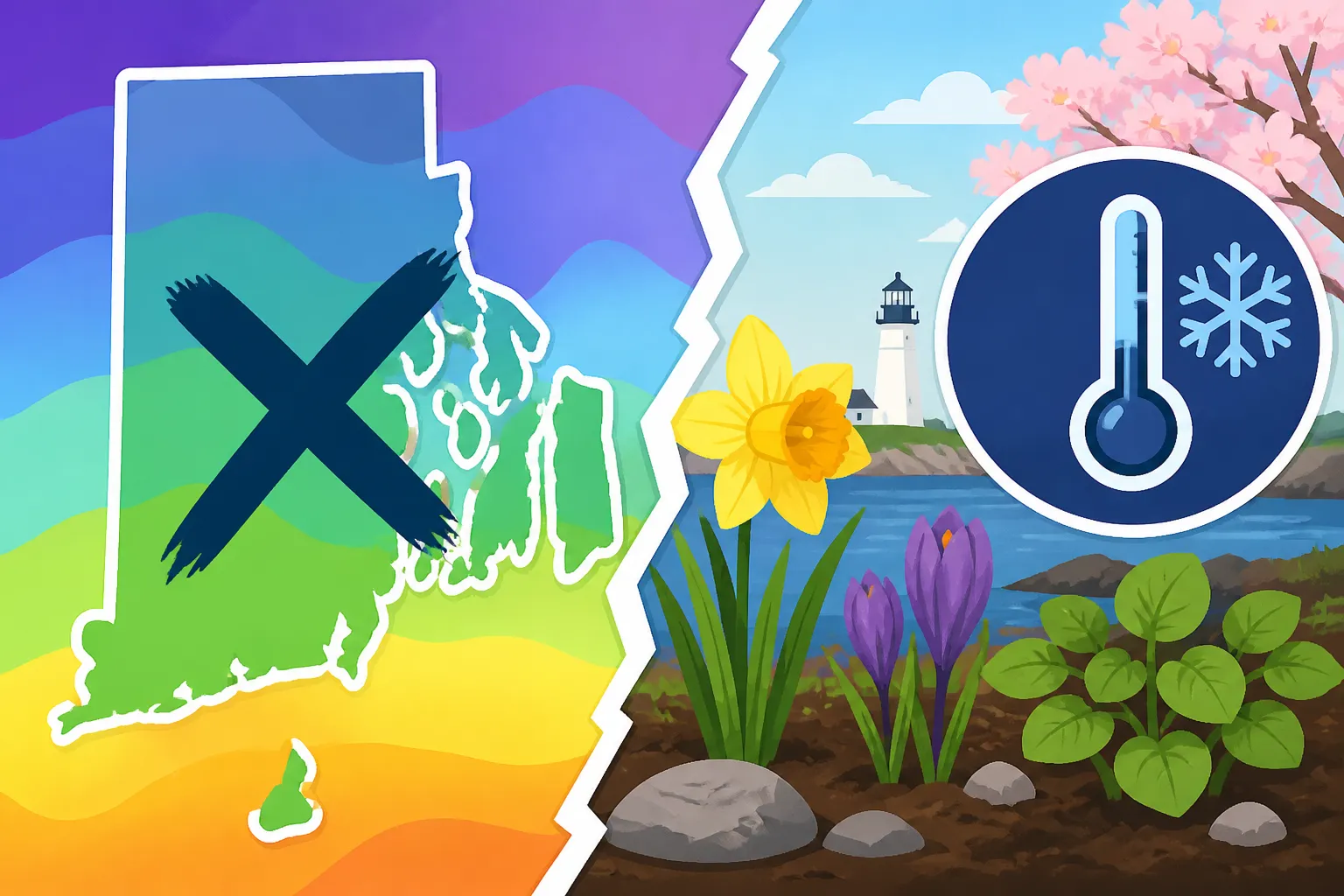
Hardiness zones and frost dates therefore answer different questions:
| Planning question | Useful information | What it does not tell you |
|---|---|---|
| Is a perennial likely to withstand winter cold here? | The hardiness zone | When spring frost will occur |
| When could cold weather threaten tender plants? | Local frost-date estimates and forecasts | Whether a particular season will follow the average |
| Is this bed likely to warm or cool differently from nearby gardens? | Site observations and microclimate | A precise prediction for future weather |
| Is a crop ready to go outdoors? | Its cold tolerance, the forecast, and bed conditions | A guarantee that it will avoid stress |
Frost estimates also have a probability behind them. A date associated with a lower risk is not a zero-risk date; it simply reflects a different level of caution than a date associated with a higher chance of frost. When using an estimate, check what probability it represents rather than treating the date as a fixed planting rule.
This is why a hardiness-zone map cannot replace a frost guide. For a regional overview, see Spring and Fall Frost Dates Across Rhode Island: Freeze Timing Guide. For the practical difference between the two measures, Hardiness Zones vs. Freeze Dates: How Rhode Island Differs is also relevant.
Why Rhode Island gardens can have different frost risks
Even within a compact state, spring conditions do not arrive everywhere at once. Rhode Island gardeners may notice differences between exposed coastal beds, sheltered urban yards, inland sites, and low spots where cold air settles. These are local effects, not changes to what a hardiness zone means.
The shoreline can influence a garden’s conditions, while buildings, trees, slopes, paving, and wind exposure can shape temperatures at the bed level. A garden close to water may experience a different seasonal pattern from one farther inland. Within the same neighborhood, a sunny protected corner can behave differently from an open patch that faces wind or sits in a dip.
These effects are useful clues, not a substitute for observation. A wall that warms in sunlight may protect nearby plants from some exposure, but its effect depends on the setting. A low area may collect cold air, but the garden’s shape, surrounding vegetation, and wind can change what happens. It is safer to treat microclimate as something to learn from local patterns than to assume a particular feature always makes a bed warmer.
Keep simple records over time. Note where frost lingers, which beds dry or warm first, and which spots are consistently exposed. Record when tender plants show cold damage, too. Those observations can help you decide whether to treat one bed more cautiously than another.
For ideas on how local conditions affect timing, see Adjusting Rhode Island Planting Dates to Your Microclimate and Navigating Rhode Island Microclimates Around Regional Frost Averages. Gardeners near the coast may also find Planting Coastal Rhode Island Beds Exposed to Damp Marine Air helpful. These topics complement a frost estimate: they help you interpret it for your own site.
How to choose a planting window
Rather than looking for a single date that makes every crop safe, choose a window based on what you plan to grow. Some crops tolerate cool conditions better than others. Tender plants, especially those that are sensitive to freezing, call for more caution.
Start with the crop’s needs. Check the seed packet or plant label for guidance on cold tolerance and planting conditions. Then compare that guidance with local frost information and the weather forecast. A hardiness zone can help with winter survival for perennial plants, but it should not be used as the deciding signal for putting out a tender vegetable seedling.
A practical approach is to divide planting into phases:
- Cool-tolerant crops: Use the crop’s own guidance and current soil and weather conditions. These crops may be suitable for an earlier planting window than tender crops, but cool tolerance does not mean immunity to every kind of cold.
- Tender crops: Wait until the frost risk is acceptable for the crop, and check the forecast before transplanting. If a cold spell is approaching, delaying the move outdoors may reduce the chance of damage.
- Perennials and shrubs: Use the hardiness zone to assess winter cold tolerance, then consider the planting site, exposure, and establishment conditions separately.
The planting window is not just about the day a plant goes into the ground. Soil that is cold, wet, or difficult to work can make an early start less useful. Conditions vary from bed to bed, so check the actual planting area instead of assuming that a calendar date guarantees suitable soil.
A forecast is particularly useful close to transplanting. Historical averages help with planning ahead; the short-range forecast helps assess immediate risk. Neither one can guarantee the outcome, so leave room to delay or protect plants when conditions call for caution.
For a broader seasonal sequence, use Vegetable Planting Calendar for Rhode Island: Sowing to Harvest. If you are deciding whether a particular seedling can leave its sheltered growing space, see When Is It Safe to Move Tender Seedlings Outdoors in Rhode Island?. The right window depends on the crop, the current weather, and the bed—not on the zone alone.
Match your approach to the crop
A useful garden calendar distinguishes between crops that can cope with cool spring conditions and plants that need warmer, more settled weather. This is more helpful than treating the whole vegetable garden as a single planting event.
For cool-tolerant crops, the main questions are whether the soil is workable and whether conditions suit that crop. A mild day does not necessarily mean the bed is ready. Likewise, a cool spell does not automatically rule out every crop. Use crop-specific guidance rather than applying the same threshold to everything.
For tender vegetables, frost risk deserves extra attention. A plant that has grown indoors or in a greenhouse may be especially vulnerable to an abrupt change in conditions. Moving it outside is not just a matter of matching a calendar date; it also involves preparing the plant for outdoor light, wind, and temperature changes.
Hardening off—gradually exposing indoor-grown plants to outdoor conditions—can help reduce transplant shock. It does not make a tender plant frost-proof. Keep the steps distinct: prepare the plant for outdoor exposure, then choose a planting window that is appropriate for the crop and the forecast.
Direct-sown crops have a different set of considerations. Seeds and young sprouts experience the conditions of the bed from the start, so soil temperature, moisture, and expected weather all matter. The fact that a crop can be sown directly does not mean a hardiness zone can identify the right day to sow it.
For crop-by-crop planning, Rhode Island Vegetable Sowing and Transplant Timing Guide can help organize the season. If you are comparing indoor seed starting with sowing in the garden, Starting Seeds Indoors vs Garden Sowing on Rhode Island Dates addresses that choice. A calendar is most useful when you treat its dates as planning guidance, then adjust for the crop and the conditions you actually have.
Use local observations, averages, and forecasts together
No single source of information can answer every planting question. A zone map, a frost estimate, a weather forecast, and observations from your own garden each have a different role. Use them together rather than asking one to stand in for the others.
Start with the zone when winter survival is the concern. Use frost information to understand the seasonal pattern of freezing conditions. Check a forecast when deciding whether to transplant soon or protect plants from an approaching cold spell. Finally, compare those broader signals with what you know about your own site.
It can help to keep a small seasonal record. You might note the first and last time frost affects different parts of the garden, which beds are exposed, and how plants respond to early-season conditions. Avoid turning one unusual season into a firm rule; repeated observations are more useful for identifying a pattern.
Also be clear about what a frost estimate means. Some tools report an average, while others may present a probability or a range. Read the explanation that accompanies the estimate, and do not assume two dates are comparable unless they use the same kind of measure. An average is a planning aid, not a forecast for the coming night.
When conditions are uncertain, a flexible schedule helps. Keep tender seedlings in a protected place until the weather and planting conditions look suitable. If plants are already outside, prepare to cover them when a cold forecast makes protection appropriate. Covers can reduce exposure, but they do not guarantee protection in every situation; use a method suited to the plants and conditions.
For a more cautious way to plan around uncertain spring conditions, see Using Cautious Spring Freeze Odds to Guard Tender Rhode Island Crops. For the role of average dates in a broader sowing plan, see Using Average Frost Dates to Schedule Rhode Island Garden Sowing. These resources can help turn estimates into decisions without mistaking an average for a fixed date.
A practical way to make the decision
When you are unsure whether to plant, work through the decision in order instead of relying on the zone label or a single date.
- Identify the plant’s cold tolerance. Read the seed packet, plant tag, or trusted growing instructions. Decide whether the crop can handle cool conditions or is sensitive to frost.
- Check the right kind of information. Use the hardiness zone for the winter-survival question. Use local frost estimates to understand seasonal risk, and a forecast for immediate conditions.
- Look at the planting site. Consider whether the bed is exposed, sheltered, low, windy, shaded, or slow to dry. Do not assume every part of the yard follows the same pattern.
- Check the bed itself. Make sure the soil is workable and appropriate for the crop. A calendar date cannot tell you whether the ground is ready.
- Choose whether to plant, wait, or protect. If a tender crop faces a likely cold spell, postponing transplanting can be a sensible option. If plants are already outdoors, consider suitable protection.
- Review conditions again. Weather changes. Recheck the forecast as planting approaches rather than assuming an earlier estimate settles the decision.
This process does not remove uncertainty. It helps you make a decision that fits the plant and the garden instead of treating a broad climate category as a local weather forecast.
A hardiness zone is valuable for choosing plants that can live through winter. A spring frost estimate is useful for planning around seasonal cold. Your garden’s microclimate and the current forecast help refine that plan. Once you keep these roles separate, planting decisions become more adaptable—and less dependent on a single date or map.
Frequently Asked Questions
Does a Rhode Island hardiness zone tell me when to plant vegetables?
No. A hardiness zone describes winter cold patterns, not the timing of spring frost. Use crop-specific guidance, local frost information, and the forecast when planning vegetable planting.
Can I plant tender seedlings after an average last-frost date?
An average is not a guarantee that frost will not occur afterward. Check the forecast, consider the crop’s sensitivity, and be prepared to delay planting or protect seedlings if cold conditions are expected.
Why might one garden bed be frostier than another nearby?
Exposure, shelter, elevation, nearby surfaces, and airflow can affect local conditions. Observe your own beds over time rather than assuming every part of the yard matches a regional estimate.
Should I ignore hardiness zones when planning a garden?
No. Zones remain useful when choosing perennials and other plants for winter survival. They simply do not answer spring-frost or day-to-day planting questions on their own.
Sources
- USDA Agricultural Research Service — 2023 USDA Plant Hardiness Zone Map | USDA Plant Hardiness Zone Map (checked November 15, 2026)
- USDA Agricultural Research Service — How to Use the Maps | USDA Plant Hardiness Zone Map (checked November 15, 2026)
Disclaimer
This article is for general informational purposes only and does not constitute professional advice. Laws, prices and regulations vary by location and change over time. Consult a qualified professional for guidance on your specific situation. Rhode Island Gardening Guide is not a government agency and is not affiliated with any university extension, state department of agriculture or other government agency.